
The Impact of Fractal Art on Emotional and Neural Wellbeing
Dr. Michelle Barry | Posted on |
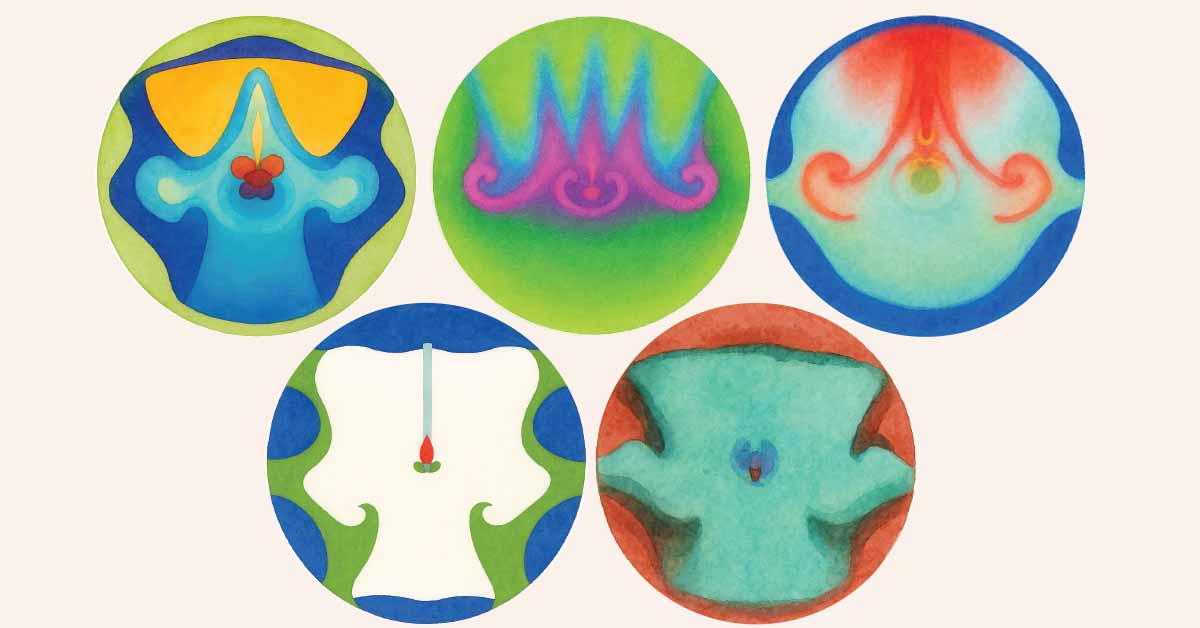
Fractal art, characterized by self-similar patterns repeating across scales, is more than an aesthetic curiosity. Emerging research reveals that gazing at fractal art has measurable benefits for emotional regulation, stress reduction, cognitive restoration, and neural efficiency. This white paper reviews scientific evidence detailing how fractal art interacts with human brain function and physiology, supporting its use as a therapeutic tool for mental health and wellbeing.
Introduction
Fractal patterns appear ubiquitously in nature and have been recognized for their aesthetic appeal and calming effects. Recent interdisciplinary studies combining psychology, neuroscience, and physiology have begun to explain why these patterns resonate with the human brain and body, offering practical applications in stress management, cognitive recovery, and mood enhancement.
The Science of Fractals and Brain Function
The human visual system is finely tuned to recognize fractal patterns efficiently, minimizing cognitive load and neural fatigue. Research shows that fractals with a fractal dimension around 1.3 to 1.5 strike a balance between simplicity and complexity, engaging visual processing areas (V1) without overwhelming them.
Physiological and Psychological Benefits
Viewing fractal art induces a relaxation response reflected in decreased heart rate, blood pressure, and skin conductance. This effect is similar to the stress-reducing benefits of natural scenery and is attributed to activation of the parasympathetic nervous system. Psychological benefits include improved mood, reduced anxiety, and feelings of calm.
Emotional Reward and Neural Pathways
Aesthetic appreciation of fractals activates reward centers like the orbitofrontal cortex and nucleus accumbens, increasing dopamine release. These neurochemical changes underpin improved emotional states and motivation, reinforcing the therapeutic potential of fractal viewing.
Mindfulness and Cognitive Restoration
Fractal art supports mindfulness by providing a focal point that reduces mental chatter and promotes attentional focus. This engagement helps suppress the default mode network, associated with negative rumination, fostering cognitive restoration and enhanced wellbeing.
Practical Applications
- Stress Management: Incorporating fractal visuals in workspaces or therapy settings to promote relaxation.
- Cognitive Recovery: Using fractal art during breaks to reduce mental fatigue.
- Mindfulness Training: Employing fractal images as meditation aids.
- Design and Architecture: Integrating fractal patterns in built environments to enhance occupant wellbeing.
Conclusion
Scientific evidence supports that fractal art influences brain function and physiology in ways that promote emotional balance, stress reduction, and cognitive efficiency. As a non-invasive, accessible intervention, fractal art offers promising applications for mental health and wellness strategies.
Clinical Applications of Fractal Art for Mental and Neural Health
1. Anxiety Disorders
- Clinical Relevance: Chronic anxiety involves overactivation of the sympathetic nervous system and attentional hypervigilance.
- How Fractal Art Helps:
- Reduces physiological arousal (heart rate, blood pressure).
- Engages parasympathetic nervous system (relaxation response).
- Provides a safe, non-verbal focal point that reduces cognitive load.
- Supporting Evidence:
- Taylor et al. (2011): Fractals in the 1.3–1.5 complexity range reduced stress responses akin to nature exposure.
- Hagerhall et al. (2008): Fractal images induced greater alpha wave activity (calm, wakeful state) on EEG.
2. Depression (Major Depressive Disorder)
- Clinical Relevance: Depression is associated with hypoactivity in reward circuits (dopamine), reduced motivation, and rumination.
- How Fractal Art Helps:
- Activates the orbitofrontal cortex and nucleus accumbens (aesthetic pleasure → dopamine release).
- Interrupts negative cognitive loops by shifting attention to non-verbal, visual experience.
- Encourages meditative or mindful states that reduce ruminative thought.
- Supporting Evidence:
- Jacobsen et al. (2006): Viewing beautiful images activates brain reward centers, including OFC.
- Spehar et al. (2003): Fractals elicit positive affect and visual engagement even in passive viewing.
3. Post-Traumatic Stress Disorder (PTSD)
- Clinical Relevance: PTSD includes hyperarousal, intrusive thoughts, and dysregulation of the autonomic nervous system.
- How Fractal Art Helps:
- Non-threatening, nature-like stimuli help downregulate arousal systems.
- Fractals offer a meditative focus without semantic triggers that could retraumatize.
- May aid in grounding and sensory integration during trauma-informed therapies.
- Supporting Theories:
- Porges’ Polyvagal Theory: Safe, predictable stimuli support ventral vagal activation (social and emotional regulation).
- Van der Kolk (2014): Non-verbal, body/visual-based interventions are key in trauma recovery.
4. Attention Deficit Hyperactivity Disorder (ADHD)
- Clinical Relevance: ADHD involves difficulty with sustained attention, cognitive control, and sensory overstimulation.
- How Fractal Art Helps:
- Provides structured, non-chaotic visual stimuli that gently hold attention.
- May reduce overstimulation without becoming boring or monotonous.
- Can support transitions into focused states.
- Supporting Evidence:
- Van den Berg & Custers (2011): Natural images (including fractal-like complexity) aid attention restoration.
- Kaplan’s Attention Restoration Theory (ART): Fractals mirror “soft fascination,” allowing directed attention to replenish.
5. Autism Spectrum Disorder (ASD)
- Clinical Relevance: ASD can include sensory sensitivity, difficulty with chaotic stimuli, and a preference for predictability and order.
- How Fractal Art Helps:
- Offers a repetitive, symmetrical, and visually structured form of stimulation.
- May reduce anxiety associated with unpredictable environments.
- Can be used in sensory rooms or digital calming applications.
- Supporting Theory:
- Temple Grandin (1995) and follow-up studies highlight the value of repetitive, calming visual input for individuals with ASD.
6. Cognitive Fatigue & Burnout
- Clinical Relevance: Cognitive overload and sustained stress lead to mental fatigue, reduced executive functioning, and emotional blunting.
- How Fractal Art Helps:
- Supports mental “reset” by efficiently engaging the visual system.
- Similar to effects of nature exposure, which restore attention and energy.
- Useful for short recovery breaks in high-demand environments.
- Supporting Evidence:
- Berman et al. (2008): Nature exposure restores prefrontal cortex functioning.
Fractals mimic this effect via visual pattern complexity.
7. Sleep Disorders / Insomnia
- Clinical Relevance: Difficulty downregulating arousal before sleep contributes to onset and maintenance insomnia.
- How Fractal Art Helps:
- Facilitates parasympathetic dominance when viewed in dim settings.
- Supports pre-sleep routines focused on calming, non-stimulating visuals.
- Helps break pre-sleep rumination by redirecting attention.
- Suggested Use:
Integrate fractal visuals into guided imagery practices or ambient displays in sleep therapy.
8. Alzheimer’s Disease & Dementia
- Clinical Relevance: Cognitive decline affects sensory integration, attention, and emotional regulation.
- How Fractal Art Helps:
- Engages visual areas and emotional pathways without requiring verbal or memory processing.
- Enhances mood and provides gentle cognitive stimulation.
- May offer moments of engagement in otherwise low-stimulation environments.
- Supporting Theories:
- Biophilic Design & Environmental Psychology: Structured, natural forms are easier to process and recall.
9. Stroke Recovery / Neurological Rehabilitation
- Clinical Relevance: After stroke, sensory-motor and visual processing areas may be impaired, along with attention and mood.
- How Fractal Art Helps:
- Can be used in passive visual stimulation tasks.
- Engages residual visual networks without causing fatigue.
- May help re-establish focus and promote calm in early recovery stages.
- Therapy Potential:
- Included in digital recovery environments, especially where nature immersion isn’t possible.
⸻
Key References
- Taylor, R. P., Spehar, B., Van Donkelaar, P., & Hagerhall, C. M. (2011).
Perceptual and physiological responses to the visual complexity of fractal patterns. Nonlinear Dynamics, Psychology, and Life Sciences. PMC Article - Jacobsen, T., Schubotz, R. I., Höfel, L., & Cramon, D. Y. (2006). Brain correlates of aesthetic judgment of beauty. NeuroImage.
- Spehar, B., Clifford, C. W. G., Newell, B. R., & Taylor, R. P. (2003).
- Universal aesthetic of fractals. Chaos and Complexity Letters.
- van den Berg, A. E., & Custers, M. H. (2011). Nature images and recovery from attentional fatigue: evidence from the brain. Journal of Environmental Psychology.
- Kaplan, S. (1995). The restorative benefits of nature: Toward an integrative framework. Journal of Environmental Psychology.
- Porges, S. W. (2011). The Polyvagal Theory: Neurophysiological foundations of emotions, attachment, communication, and self-regulation.
⸻
References
- Taylor, R. P., Spehar, B., Van Donkelaar, P., & Hagerhall, C. M. (2011). Perceptual and physiological responses to the visual complexity of fractal patterns. Nonlinear Dynamics, Psychology, and Life Sciences, 15(4), 333–354. https://www.ncbi.nlm.nih.gov/pmc/articles/PMC3115659/
- Spehar, B., Clifford, C. W. G., Newell, B. R., & Taylor, R. P. (2003). Universal aesthetic of fractals. Chaos and Complexity Letters.
- Jacobsen, T., Schubotz, R. I., Höfel, L., & Cramon, D. Y. (2006). Brain correlates of aesthetic judgment of beauty. NeuroImage, 29(1), 276–285.
- van den Berg, A. E., & Custers, M. H. (2011). Nature images and recovery from attentional fatigue: evidence from the brain. Journal of Environmental Psychology, 31(3), 295-301.